Unit 301 No. 6 Xianghong Road,Torch Hi-Tech Zone Industrial Park,Xiang'an District, Xiamen P.R.China
+86-13365922007
[email protected]


As demand for rehabilitation, recovery, and professional wellness services continues to grow, pneumatic compression therapy equipment has become an increasingly important part of many clinics, physiotherapy centers, sports recovery facilities, and healthcare businesses.
However, choosing professional compression therapy equipment is not simply about selecting a machine with more chambers or a wider pressure range. Different users have different requirements for treatment configurations, accessories, usability, quality, compliance, and long-term supply.
For distributors and professional buyers, understanding these factors before purchasing can help them select equipment that better matches their applications and business needs.
As an experienced rehabilitation equipment manufacturer, Xiamen Weiyou Intelligent Technology Co., Ltd. (VU) provides a range of pneumatic compression therapy solutions and OEM & ODM services for global customers.
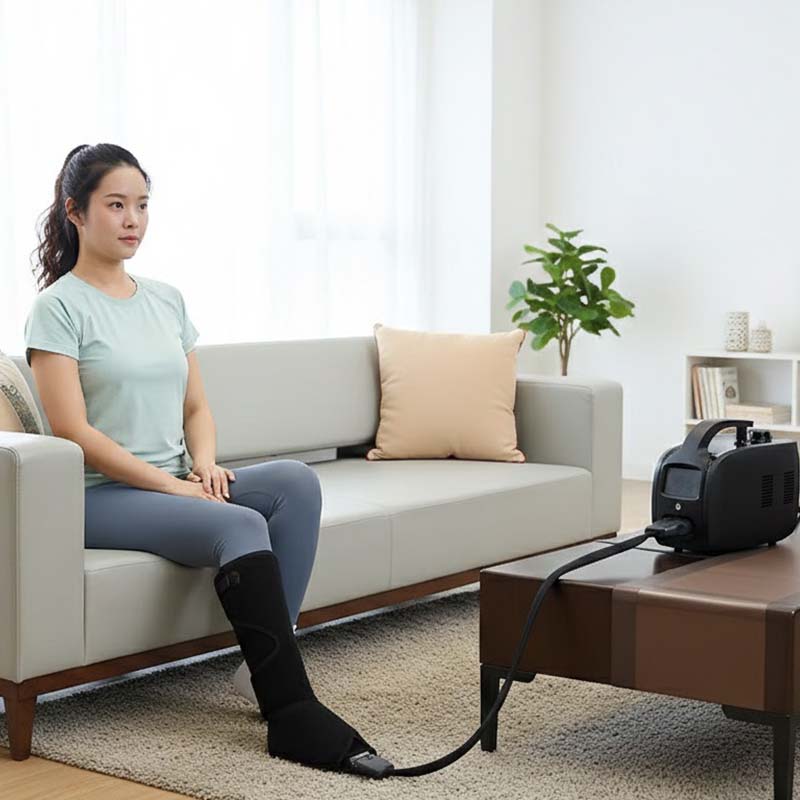
Professional compression therapy equipment generally uses controlled air pressure to sequentially inflate multiple chambers within a wearable sleeve or garment.
The chambers can inflate and deflate according to a preset sequence, creating segmented compression around the selected body area.
Depending on the product configuration, compression therapy systems may include:
The number of air chambers is another important consideration. Common configurations include 4-chamber, 6-chamber, 8-chamber, and higher-chamber systems.
A higher chamber count can provide more segmented control, but the best configuration depends on the intended application rather than simply choosing the highest number available.
The first question professional buyers should ask is:
Where and how will the equipment be used?
A physiotherapy clinic, sports recovery center, wellness facility, distributor, and home-use retailer may have completely different requirements.
For example:
Rehabilitation clinics may prioritize flexible pressure settings, multiple garment options, reliable operation, and professional usability.
Sports recovery centers may focus more on convenient operation, comfortable compression garments, portability, and efficient session management.
Distributors may place greater emphasis on product differentiation, certifications, packaging, private labeling, and long-term manufacturing support.
Defining the application first makes it easier to select the right machine configuration.
The chamber configuration directly affects how compression is delivered through the garment.
A basic 4-chamber system can provide segmented compression across different areas, while 6-chamber and 8-chamber systems can divide the treatment area into more sections.
For example:
The right choice should be based on the intended use, garment design, control requirements, and target customer.
More chambers do not automatically mean a product is better for every user.
Pressure control is one of the most important specifications when evaluating a pneumatic compression therapy machine.
Professional buyers should review:
Different users may require different compression settings, so a system with intuitive controls and flexible configuration can provide greater versatility.
For professional environments, the interface should also be easy for staff to understand and operate.
The machine is only one part of a complete compression therapy system.
The design and fit of the compression garment are equally important.
Depending on the equipment, buyers may need:
Leg boots for lower-limb applications.
Arm sleeves for upper-limb applications.
Waist garments for targeted body-area compression.
Compression pants for broader lower-body coverage.
Compression jackets for upper-body applications.
Full-body systems for businesses that require multiple garment configurations.
For distributors, interchangeable garments can also provide an opportunity to create different product packages for different market segments.
Professional compression therapy machines are not always used in one fixed location.
Sports recovery businesses, mobile rehabilitation services, and home-care markets may benefit from compact and rechargeable equipment.
Portable systems can provide greater flexibility when users need to move equipment between rooms or locations.
Plug-in systems, on the other hand, can be suitable for environments where the device is primarily used at a fixed workstation.
Therefore, buyers should consider:
The best power configuration depends on the application and operating environment.
For professional and international buyers, product quality and regulatory compliance should be evaluated before making a purchasing decision.
Important considerations may include:
VU's manufacturing and quality management capabilities include ISO 13485 and ISO 9001, while selected products may have certifications such as CE / EU MDR and other applicable market approvals depending on the specific product and intended use.
Importantly, certification requirements can differ between products and markets. Buyers should confirm the regulatory status and documentation applicable to the exact model they intend to purchase
A compression therapy machine is often not a one-time purchase for a professional business.
For distributors and healthcare equipment companies, the manufacturer can directly influence product consistency, customization options, delivery capability, and long-term cooperation.
Before selecting a supplier, buyers should consider:
R&D capability
Can the manufacturer support product development and technical customization?
Manufacturing capacity
Can the supplier maintain consistent production as order volume increases?
OEM & ODM capability
Can the manufacturer provide customized branding, packaging, garments, or product configurations?
Quality management
Does the factory have established quality management systems?
Product portfolio
Can the supplier provide multiple related products as the business expands?
Technical support
Can the manufacturer provide timely communication during product development and after-sales service?
For B2B buyers, these factors can be just as important as the initial product price.
When comparing different products, it is useful to create a simple evaluation framework.
| Feature | What to Check |
|---|---|
| Chamber configuration | 4, 6, 8 or more chambers |
| Pressure control | Adjustable range and control accuracy |
| Operating modes | Sequential and customizable modes |
| Garments | Legs, arms, waist, pants, jacket or full body |
| Power | Plug-in or rechargeable |
| Portability | Weight, dimensions and battery design |
| Interface | Display, controls and ease of operation |
| Quality | Manufacturing and inspection systems |
| Compliance | Certifications applicable to the target market |
| Customization | OEM, ODM, logo and packaging options |
| Supplier support | Technical, documentation and after-sales support |
This approach allows buyers to compare products based on their actual business requirements rather than focusing on a single specification.
VU develops and manufactures a range of pneumatic compression therapy products designed for different professional and commercial applications.
The company's portfolio includes different chamber configurations and garment combinations, allowing customers to select solutions according to their target markets.
For example, VU's product range includes 4-chamber, 6-chamber, 8-chamber, and 12-chamber compression systems, as well as portable rechargeable configurations.
The equipment can be paired with different compression garments, including leg boots, pants, jackets, and other accessories.
This modular approach gives distributors greater flexibility when building product portfolios for rehabilitation, physiotherapy, sports recovery, wellness, and home-care markets.
Standard products are not always enough for a competitive B2B market.
Distributors may need their own brand identity, packaging, product configurations, or market-specific solutions.
VU supports OEM and ODM cooperation for qualified business partners.
Depending on the project, customization can include:
For ODM projects, VU can also support the development process from product concept and configuration to prototyping, testing, manufacturing, and delivery.
This enables distributors and rehabilitation equipment brands to develop differentiated product offerings while working with an established manufacturing partner.
The cheapest compression therapy machine is not necessarily the most cost-effective solution for a professional business.
A better purchasing decision considers the complete product lifecycle:
Product quality → User experience → Reliability → Compliance → Customization → Supply capability → Technical support
For clinics and professional facilities, reliable operation and appropriate product configuration can influence daily workflow.
For distributors, consistent manufacturing, OEM & ODM capability, product documentation, and supplier communication can have an even greater impact on long-term business development.
That is why selecting the right manufacturer should be considered part of the purchasing decision.
Choosing professional compression therapy equipment requires more than comparing prices or chamber numbers.
Buyers should evaluate the intended application, chamber configuration, pressure control, compression garments, portability, quality management, regulatory requirements, customization capabilities, and manufacturer support before making a decision.
For global distributors, rehabilitation equipment companies, physiotherapy businesses, and professional recovery facilities, working with an experienced manufacturer can also provide greater flexibility when developing and expanding a product portfolio.
With experience in intelligent rehabilitation equipment manufacturing and OEM & ODM cooperation, Xiamen Weiyou Intelligent Technology Co., Ltd. (VU) continues to provide pneumatic compression therapy solutions for international markets.
Looking for a professional compression therapy equipment manufacturer or OEM & ODM partner? Contact VU to discuss your product requirements and build a solution for your target market.
 EN