Unit 301 No. 6 Xianghong Road,Torch Hi-Tech Zone Industrial Park,Xiang'an District, Xiamen P.R.China
+86-13365922007
[email protected]



For decades, the foundation of orthopedic recovery has relied on two fundamental elements: temperature and time. Whether treating a postoperative joint replacement or an acute sports muscle tear, clinical directors know that managing inflammation and promoting blood flow are the keys to soft tissue recovery.
However, the traditional methods of delivering this care—leaky ice bags, frozen peas, and scalding microwave gel packs—are archaic, inefficient, and potentially dangerous. As a manufacturer engineering advanced medical care equipment since 2010, we have witnessed a massive shift in hospital procurement. Today, clinical standards dictate the use of automated, fluid-circulating thermal devices. At the forefront of this shift is the hot cold therapy unit.
For medical distributors, orthopedic supply chains, and hospital procurement teams, understanding the clinical applications of a hot cold therapy unit is vital. This is not just a comfort device; it is a critical piece of medical infrastructure used to build modern pain management programs. Here is an expert guide on how these units function and why they are dominating the B2B rehabilitation market.
To effectively market a hot cold therapy unit to clinic directors and surgeons, B2B buyers must understand the physiological mechanics of contrast therapy. Soft tissue recovery is essentially an issue of fluid dynamics.
When a patient suffers a ligament tear or undergoes invasive orthopedic surgery, the body’s natural response is acute inflammation. Fluid rushes to the site, causing swelling, stiffness, and severe pain.
An automated hot cold therapy unit allows therapists to program alternating thermal cycles without ever removing the pad from the patient’s body. This creates a physiological "pumping" effect within the soft tissue, dramatically accelerating the healing timeline compared to static, unmoving ice packs.
Perhaps the most significant commercial driver for the hot cold therapy unit in recent years is the global healthcare initiative to reduce opioid dependency. Hospitals are under immense regulatory pressure to adopt "opioid-sparing" pain management protocols following orthopedic surgeries.
When a hospital procurement team sources a medical cold therapy system, they are actively investing in narcotics reduction. By wrapping a surgically repaired shoulder or knee in a continuously circulating thermal pad, the deep-penetrating cold consistently numbs the pain receptors. Patients utilizing a hot cold therapy unit immediately post-op report significantly lower pain scores and, consequently, request fewer doses of oral painkillers.
For B2B medical distributors, this is your primary selling point to hospital administrators: supplying a premium hot cold therapy unit directly supports institutional goals of reducing post-operative narcotic use, thereby improving patient safety and lowering pharmacy costs.
To illustrate the ROI and clinical value of this equipment, consider a recent B2B partnership we developed with a regional orthopedic distribution network in Australia.
The distributor’s clients (a chain of outpatient sports medicine clinics) were struggling with soft tissue recovery times for athletes undergoing ACL (Anterior Cruciate Ligament) reconstruction. The clinics were relying on static gel packs that lost their temperature within 15 minutes, requiring constant staff intervention to swap them out.
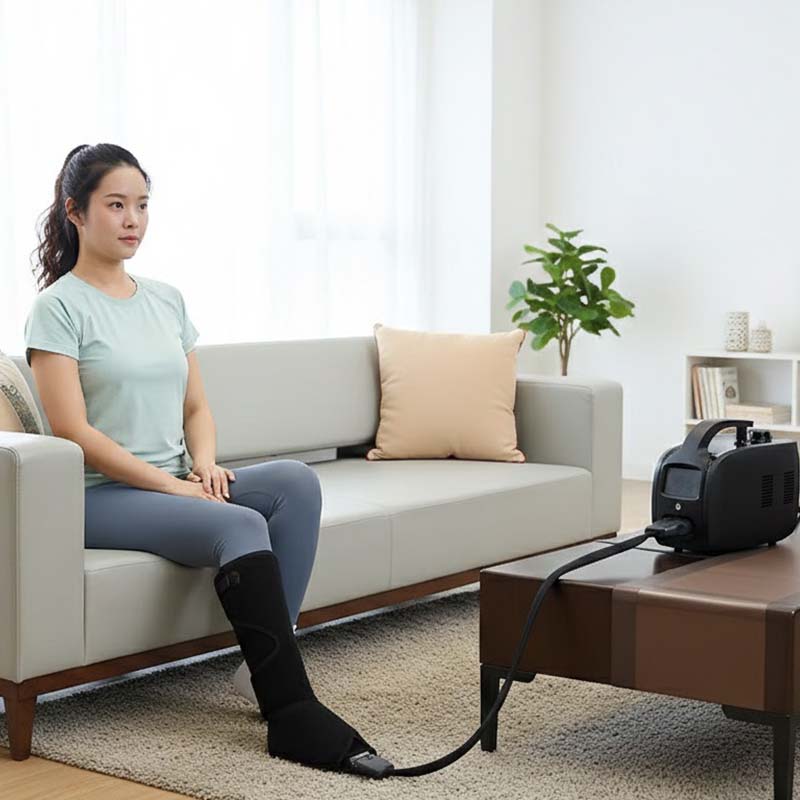
The distributor upgraded the clinics' recovery bays with our clinical-grade ice and heat therapy machine fleet. Instead of manual labor, the nursing staff simply wrapped the athlete's knee, plugged the pad into the console, and set a 45-minute automated contrast protocol.
The results were twofold. Clinically, the continuous thermal pumping effect reduced joint effusion (swelling) by 30% in the first week, allowing physical therapists to begin range-of-motion exercises days earlier than usual. Operationally, it freed the nursing staff from constantly running to the clinic's freezer. Seeing the efficiency, the clinic network expanded their contract with the distributor to supply a portable hot and cold therapy machine directly to patients for home-use during the first month of discharge.
Not all thermal units are created equal. The market is flooded with cheap, consumer-grade coolers that utilize weak aquarium pumps. When sourcing a hot cold therapy unit for professional medical environments, reliability, safety, and hygiene are paramount.
If a thermal unit fails or leaks over a fresh surgical wound, the liability is massive. Use this procurement matrix to differentiate a true B2B hot cold therapy unit from a retail gadget:
Feature |
Consumer/Retail Device |
Clinical B2B Standard |
Impact on Pain Management |
Temperature Control |
Ice bucket with no gauge |
Digital thermostat with lockouts |
Prevents frostbite and thermal skin burns. |
Pump Mechanism |
Weak, noisy impeller |
Medical-grade, brushless quiet motor |
Delivers consistent fluid pressure without disturbing sleeping patients. |
Therapy Delivery |
Cold only |
Programmable contrast (Hot/Cold) |
Supports both acute numbing and long-term tissue healing. |
Pad Ergonomics |
Flat, generic squares |
Articulated, joint-specific laser-welded wraps |
Ensures 360-degree contact for shoulders, knees, and ankles. |
As healthcare continues to pivot toward non-pharmacological pain management and accelerated outpatient recovery, the demand for intelligent thermal regulation will only grow. Soft tissue trauma will always require precise temperature management.
By integrating a high-quality hot cold therapy unit into your medical distribution catalog, you provide hospitals and physical therapy clinics with a tangible solution to their most pressing challenges: reducing post-op swelling, cutting down on opioid prescriptions, and optimizing staff labor. Partnering with a seasoned manufacturer ensures that the hot cold therapy unit you supply is engineered for the rigors of heavy clinical use, securing your reputation as a trusted vendor in the lucrative orthopedic supply chain.
 EN